Sunday, September 18, 2016

Make it through the night, little guy.

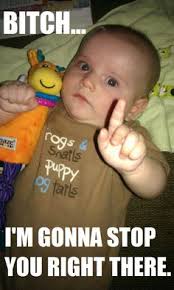
May he wake up looking less like this  . . .


and more like this, except that I don't care about the color of his hair or skin.


Tonight is my second and final on-call night of this session. I may not have another on-call weekend for quite some time.  I want to receive calls because I want to demonstrate my ability to handle them to my superiors, but I don't want life-or-death situations, not because I cannot handle them: I don't handle them -- I pass them off to my superiors immediately -- but because I don't wish life-or-death situations on anyone, and in particular, on babies and children.

I'm spending tonight at the children's hospital associated with my medical school. I'm not required to do this, but I have one little guy who is only four months old who is at a very critical stage of meningitis. Even omitting his name, I cannot go into too many details regarding his condition without committing at least one HIPAA violation. Chances are that no one who had the power to do anything about it would ever be any the wiser if I did, but those laws exist for good reasons and are not mere technicalities. I can say that the form of meningitis he is fighting is bacterial, which is more serious than viral forms of the condition. It is a type for which a vaccine has not yet been approved. Even if it were one of the vaccinatable types, he might not have received enough of the boosters yet to have developed sufficient immunity and might have contracted the illness anyway. In any event, it's a fluke and happened through no fault of his parents, who are competent care providers who maintain a clean home environment for their two precious children.

I'm here tonight for a couple of reasons. This is probably the baby's make-it-or-break-it night. I probably wouldn't get any sleep at home, and would drive the nurse's station bonkers with my frequent calls. Secondly, I'm not sure such is really the case and not that it only seems to be true, but a disproportionate number of health crises seem to happen in the late night and early morning hours. Perhaps it only seems that way to doctors who hate being awakened in the middle of REM sleep cycles, but it surely does seem to be the case. If such is to happen with this baby, there's probably not much I can do to help him directly, but I can probably get the for-real on-call pediatrician and pediatric neurologist here faster than the nurse's station can or will. There are other pediatricians on duty tonight here at the hospital, but if there is a true crisis, we want both the primary care physician and the assigned pediatric neurologist here ASAP. I have no fear whatsoever of calling them no matter what time it is. Depending upon the doctor, nurses sometimes hesitate because they may have had their heads bitten off on more than one occasion by the doctor or doctors in question over arguably unnecessary calls. The nurses will have to continue to work with these doctors. In another three-and-one-half weeks, I'll move on to my OBGYN rotation and will say adios, arrivederci, and adieu to all the doctors I'm dealing with presently. These doctors will have a say in my final grade, but unless I'm being especially obnoxious, as in phoning them approximately every fifteen minutes for light and transient causes, my grade for this rotation will not suffer.

If you're thinking that I will never survive a medical career if I feel that I must spend the night in a hospital every time I have a sick patient, you're right. I cannot behave this way throughout my career. This little baby, however, is my very first critically ill patient, and I reserve the right to treat him differently than the others. When I reach my one-hundredth critically ill patient, which may or may not happen depending upon the specialty I choose, the circumstances of my life may be such that I will not have the luxury of spending the night in a hospital even if I feel the inclination. Real life may get in the way. At this juncture, however, real life has not yet interfered to the point that I have to stay home every  night. All I have at home is a cat, who could fend for herself if she needed to, but she doesn't even need to because she has my brother there with her, and she likes him more than she likes me, anyway. Matthew can babysit the cat. I'll stay with the baby and his family.

I'm situated just outside the baby's section of the quarantined intensive care unit, in a quiet end of the hall. We have a a crib against a wall for the three-year-old sister, who fell asleep in her father's arms about fifteen minutes ago and was placed in the crib. She's sleeping blissfully, unaware of the severity of her baby brother's condition. Sleeping with her is a stuffed panda (she's old enough that it's safe) that I bought for her. Once a doctor bought a stuffed panda for me when I was in the hospital. Even though I was almost too old for such a gift, it made me feel better. When I saw the stuffed panda in the gift shop, it reminded me of the one I had been given, and it occurred to me that even though the tiny girl doesn't understand the gravity of the situation, she clearly knows that something is wrong, and she is totally out of her element, and that I should get the stuffed panda for her.

The baby's mother is praying the rosary. I have a rosary in my pocket. I don't ordinarily carry one at work, but it seemed like something I might want to use tonight. I shall take it out of my pocket and join her in praying for her tiny boy. While deep in my heart I'm not sure how much it really helps, I'm pretty sure it can't hurt, and at least it's something she (and I) can do while awaiting the outcome. My dad is here, which is good. He can say the rosary along with me in Spanish until I get it right. The mother is whispering too quietly for me to hear her.

Please join me in wishing, hoping, praying, or any combination of the three, for a stronger and healthier little boy by the time the sun returns to our part of the Earth. This once,  I shall not be sincere in reciting the "Thy will be done" line of the "Our Father." Can my will and the will of the baby's parents be done  this time? I want with all my heart for this baby to return to full health, and to be safe at home with Mami and Papi and Hermana as soon as is possible.

My son just stuck a toothpick up his rectum: the joys of pediatric on-call weekends.

Is this something you should be eating? Think before putting it in your mouth.


I'm on call and getting quite a few calls tonight. Most are straightforward and I can answer. I sent a baby to the ER for a fever. It's probably routine -- I hope it IS routine -- but the fever was high enough that I didn't feel that meningitis could be ruled out.  I can't give out a lot of info even in this semi-anonymous blog because if someone were onto me, I could be up to my neck in HIPAA violations. Suffice it to say that I've received calls that I myself would have made as a parent if I were not a doctor, but some of the calls that have come to me either were stupid calls or calls that could have waited for the light of day or even for regular office hours on Monday.

I had an allergy call where I could hear wheezing so profound that I told the father to hang up and call 911 immediately. I also called 911 myself just in case the parent couldn't get through and to let the switchboard operator  know that it wasn't a hysterical parent calling needlessly, and that paramedics needed to get there STAT. Additionally, I told the father to administer the Epi-pen, which he fortunately had on hand. This was a several hours ago. It was a nut allergy. Sometimes it's trial and error in terms of what nuts a kid who has a peanut (which is not actually a nut, but that's a story for another day) allergy can tolerate. He had eaten an almond apparently at school (which his parents knew nothing about) and had done fine with it (thank goodness!), but that gave him the confidence to try a hazelnut when no one was looking, which was apparently NOT  OK.  By the time both the actual physician backing me up and I got to the hospital, epinephrine had been administered and he was much better. He's still spending the night in the hospital for observation, but he should be fine. He's ten and should have known better, but even adults do stupid things at times. I hope he learned something from this.

I have strong opinions related to nut and peanut allergies and how they should be handled.  The onus should be on the parent and/or care provider early in a child's life.  At the same time, the child should be taught that a nut or peanut can kill him from very early in his life, as in staring at about two. By the time a developmentally normal child is three, the concept should be firm in his or her mind what a nut or peanut is, that it is highly hazardous to his or her health, that it is unseen in many different foods, and that to be safe, he or she probably shouldn't eat ANYTHING without consulting a parent or care provider.  You still do not trust a three-year-old to self-monitor for his or her peanut or nut allergy, just as you wouldn't trust an unsupervised toddler around a swimming pool whether he or she had been given swimming lessons or not, but the seed must be planted. 

By the time a child is old enough for kindergarten, the concept should be so firm in his or her mind that you could leave him or her alone in a room full of peanuts and peanut butter, chocolate covered or otherwise, and he or she would run in the opposite direction rather than expose himself to the stuff. You should teach him that all sorts of candy and cookies contain peanuts, and that he must not eat any of such things without parent approval.  Also, unless the child has a very specific medical reason he or she absolutely cannot have products containing sugar, a kid with a nut allergy should not be denied sweets. If a child is totally denied access to sweets, he or he will sneak or steal them. The sweet the kid purloins won't be one the parent has checked or approved, and the child's life may be at risk. Perhaps even before you conceived your first child, you had lofty ideals of perfect nutrition for the children you would one day have. If your kid has a nut or peanut allergy, forget it.  A child's desire for something sweet is essentially innate. It's better to control the sweets your allergic child consumes than risk having him or her grab whatever he or she can reach on the sly. And if your child has a double-whammy of being diabetic as well as allergic, you'll need to invest in decent-tasting sugar-free treats. A diabetic child CAN have some sugary sweets, but it shouldn't be a habit. You don't want to build up insulin resistance.

By now, your nut- or peanut-allergic child is ready for kindergarten, or first grade if your school has half-day kindergarten. Some schools have nut-free policies for their cafeterias even for those students who bring their own lunches. If you think your child is therefore safe, think again. No one at school inspects the contents of every child's home-prepared lunches. Some parents are simply non-compliant. In other cases, someone other than the usual caregiver prepares a lunch for a child and is unaware of the peanut- and nut-free policy. In other cases, a child grabs a treat from his parents' stash and puts it in his or her pocket. YOUR CHILD MUST BE FULLY INDOCTRINATED TO NEVER ACCEPT FOOD FROM ANOTHER CHILD IN THE CAFETERIA.  The burden here is on you and on your child, assuming your child has no developmental delays. If developmental delays are present, additional supervision is in order.

Some schools do not ban peanuts or nuts. In such cases, parents have been fairly warned. Most school lunches no longer serve peanut products, and perhaps an allergic child can be seated among those eating school-provided lunches. This may minimize risks of allergic reactions related to peanuts and nuts, but it cannot eliminate them entirely.  Parents of allergic children must be vigilant in educating their children as to the dangers of peanut or nut ingestion. 
A child of normal intelligence who is old enough for school is old enough to be taught to steer clear of the things that are seriously harmful to him or her, whether it's rat poison or nuts. If your child is disobedient, use discipline, scare tactics, or whatever you must use.  Your child must know by the time he or she is of school age that he is not to eat nuts or peanuts, and furthermore, he or she is never to eat ANYTHING not approved by his parent, primary caregiver,   or teacher. 

Whether or not your child's school has a peanut- or nut-free policy,  your allergic child will have to behave smartly if he or she wishes to survive. Several years ago in Virginia, a peanut-allergic child seven years of age accepted a few peanut M&Ms from another child on a school playground. It resulted in the death of the allergic child. While the parent sought and probably received a whopping settlement, the fault, in my opinion,  belonged to the child and the child's caregiver. Seven is old enough to know better. Two supervising adults on a playground with one hundred or so children, vigilant as they may be, cannot possibly prevent every possible exchange of less than a handful of candy that might occur on a playground. Even if you doubled the level of supervision, transfer of small food items would still be possible. Most schools don't allow food on playgrounds, period, but children break rules, and they're not always caught.

The child I sent to the hospital tonight didn't do something terrible. He really thought the hazelnut was safe because the almond had been safe. The parents weren't terribly at fault either, as they had told him until they were purple in the face not to eat nuts. (His known allergy was peanuts, but it's wise to void all nuts with a peanut allergy until a board-certified allergist tells a parent otherwise.) Still, the incident underscores the need for caution on the part of those with peanut and nut allergies. 

The Reverend Alexis, Grand Vicar of the Church of Nut Allergies, has concluded her weekly sermon. Go now to love and serve the Lord, and to avoid any food to which you are allergic, and, perhaps more importantly, to teach your affected children to do the same. I must now consult with a parent whose child ate half a gummy bear, then stuck the remaining half up his nose. Why I'm not hearing about this until 5:00 a.m. is one of life's great mysteries.

P.S. I checked on the feverish baby while at the hospital. It's meningitis, though it is not yet known what type. Please pray for him or send positive thoughts. He's only four months old.
It may be cute and it may look harmless, but some people should not eat t.

Little pitchers have big ears.


I never really understood the old maxim "Little pitchers have big ears."  I know it means that a person should watch what he or she says around small children. I just don't get what any of it has to do with pitchers. Most maxims or proverbs can be analyzed and made sense of relatively easily. "You can't make a silk purse out of a sow's ear." You need the proper raw material for a particular end product. "Birds of a feather flock together." People spend time with people who are like themselves. "Beggars can't be choosers."  If you're asking for something from someone else, you get whatever they feel like giving you. Duh. Most are quite self-explanatory. **

Stupidity of a particular maxim aside, a person truly should watch what he or she says around young children.  My Godchildren, Andrew and Camille, ages 23 months and 14 months respectively, have learned a new word (or two new words, depending upon the form you use in writing it): damn it, or the more colloquial dammit. They certainly didn't learn it from me, their Godmother. I can swear right along with the most profane of sailors or truck drivers, but I don't do it in the presence of or within earshot of babies who are learning to talk. No, Andrew and Camille learned this one from their dear mother, whose favorite word up to this week was dammit (or damn it, if you prefer).

Jillian is not the most profane person on the planet. It takes something like a broken bone to elicit in f-bomb from her. I've never heard her call anyone the "b" word, either, nor have I even heard her say shit. Scott, her husband, actually curses far more than she does, but he mixes up his swear words a bit, and he probably doesn't say them right in front of the babies quite so much, either. Jillian just happens to be fond of saying damn it

I told Jillian she should turn on her video camera and try to catch both of them saying the word just to preserve it for posterity. She said she had already done so. It took about five minutes, she said, to get both of them saying it on camera.

Now comes the tough part, which is eradicating the word from the children's vocabulary.  Washing babies' mouths out with soap is no longer kosher if ever it was. Swearing in front of babies aside, Jillian is not an idiot. She knew that overreacting would be the very worst thing to do.  She employs a very proper nanny  who is very sensible as well. They've both been very good at ignoring any use of the word (from the babies; Jillian has stopped saying it).  Jillian is keeping her kids away from anyone except the few adult relatives who can be persuaded to pretend they don't hear anything when either child says damn it.
Jillian says Baby Camille articulates the term with a level of clarity that would make any speech pathologist proud. If the babies are saying it to each other, Jillian or the nanny might try to distract them. If they say it to her , Scott, or the nanny, they are totally ignored no matter what it is they're asking for unless they are choking or in similar distress. 

The nanny says Jillian needs to replace damn it with a harmless term, then act as though she shouldn't have said it, and the babies will pick up on the new term and forget damn it. I suggested Donald Trump. She's considering it. Hillary would work equally well.

I asked Jillian how she survived three years of teaching in Utah County with the tendency to say damn it approximately once every twenty seconds. She says she turned her back to the students and said it under her breath.

My father is a frequent user of profanity, but he didn't exercise his full vocabulary in front of us until we knew what we could and could not say. I doubt he would have said much had we repeated any of his salty terms, but if my mother had learned of it, God only knows what our fate might have been. Matthew and I got our rebellion out of our systems by using poor grammar when our parents could not hear us. Ain't in our household probably would have merited a far more severe reprimand than the f-bomb, anyway. Double negatives, once we were old enough to understand how the English language was supposed to be constructed, would have been considered just about as bad.
My brother for some reason liked to use the term iffen. He must have heard it on a TV show, or maybe Donnie Baker said it on Bob & Tom, because I don't think we ever knew a single person in real life who used that word.

Baby Andrew has his two-year exam and Baby Camille has her fifteen-month exam next month. If Jillian doesn't give me the scoop on whether or not they got through the appointment damn it-free, my uncle, who is their pediatrician, will probably tell me. I'm sure it's a HIPAA violation, but he'll tell me anyway. 

** Idioms, on the other hand, are totally different.  "Pull a rabbit out of a hat," "by the skin of your teeth," "shake a leg," "break a leg," or "shoot from the hip," are far less literal and more perplexing to those learning the English language.

Friday, September 16, 2016

If his name is Tyler, cross him off your list.

or, in my case, literally running as opposed to running errands


Today was a doozy of a day, or it at least started out that way. I won't give you every single gory detail, but I'll share just enough that you understand from whence I come.

I've been in a relationship for a couple of weeks. The guy is an elementary school teacher currently working toward a doctorate in physics. His aim is to work in upper-level academia as opposed to research.  Let us hope that his gifts for teaching at the college level far exceed those of his teaching skills at the mid-elementary level. I sat in on a math class on a day that I had off. He might as well have spoken Turkish to those poor English-speaking students. I ordinarily don't step on toes to such a degree, but I eventually asked if I could have a try at explaining the concept at which he was so miserably failing in getting across to his students. In five minutes, I had every kid in the class clear on the concept that he had spent the previous thirty-five minutes attempting in vain to teach, and I'm not even a properly credentialed teacher. (I do hold emergency credentials in multiple subjects and mathematics.) Teaching university students (if he's ever lucky enough to be granted an actual professorship) is far different than teaching sixth graders, but a teacher still needs the ability to convey mathematical concepts verbally even at the university level.  I'm surprised he ever passed the teacher education component of his credentialing program.

At any rate, I shall not be teaching mathematical concepts to sixth graders at any point in the near future. The "teacher" and I are finished. Kaput. The relationship is every bit as dead as is Abraham Lincoln.(I might have used JFK as my example of deadness, but there are still a few wingnut conspiracy theorists out there who  believe that JFK is still alive and is being kept in a highly secluded wing of a rehabilitation facility somewhere in west Texas.)  I'm not a huge fan (though I'm not a huge detractor, either) of Taylor Swift, but she perfectly summed my current relationship with this guy, whom we shall call "Tyler" (which may or may not be his actual name) with the title of her song "We Are Never Ever Getting Back Together."

The immediate impetus for the breakup, which is an example of perfectly good riddance, happened when he realized in the midst of an early morning breakfast on the enclosed terrace of his apartment (FYI, I drove to his apartment this morning; it wasn't a sleepover) that he was late for an early morning curriculum meeting. He departed in haste and in not the most polite manner, though  I excuse him for that on the grounds that I can imagine what it's like to realize one is not where one is supposed to be. The issues for which I cannot quite forgive him were that A) he locked me inside his terrace, which is enclosed by ten-foot cinderblock walls; B) my purse, keys, ID, and cell phone were in his locked apartment. C) most importantly , he both tried to blow me off and failed to apologize for his transgressions. To err is human; to fail to forgive is even more human. I'm every bit as human as humans come.

I had to scale the wall (by law there is supposed to be a ladder in the terraces with ten-foot cinderblock walls, but dumbo thought it was a good idea to let a friend borrow his ladder; he would run the risk of burning to a crisp if there were a fire and the only way out was through the back, except that I extended him the kindness of ratting on him to the local fire department), then was forced to jump down and run the risk of injuring an ankle on the ten-foot drop; fortunately I'm a retired gymnast and can usually land a drop without injury, then was forced to run the roughly four miles (in scrubs, though I was at least wearing tennies) to make it to work on time, since I had no way of telephoning anyone. The doctors and nurses handed me extra scrubs and a towel, and I was allowed to go into the private doctors' bathroom to scrub up. The scrubs were miles too big for me. The drawstring on the waist of the pants wasn't capable of being tied tightly enough to actually cinch the garment to my waist. The pants fell twice during the day.  A male RN who bats for the other team made a disparaging remark that I should feel free to go braless for the day if it would make me feel fresher, as absolutely no one would ever know the difference. I could have screamed, "SEXUAL HARASSMENT"  at the top of my lungs, but the very last thing I need is to be on the accusatory end of another sexual harassment charge. I instead accused him of being jealous of my flat and tightly muscled chest and my legs as well. His man boobs are bigger than I'd want my female boobs to be.

Though some subterfuge by one of the pediatricians, my purse and keys were delivered to my office by the noon hour even though the moron initial insisted he couldn't possibly meet me or get them to me until at least 6:30 tonight. The half-wit lacked the cojones to deliver them to me himself. He had a co-worker bring them.

I was tired all day. I sprint and hurdle, but do not run long distances unless forced to do so. I probably couldn't even complete a 10K without walking part of it.  Necessity, however, sometimes forces one to do even what he or she ordinarily cannot accomplish.  I'm capable of running close to an eight-minute mile in a pinch, and I did. Then, however, I was tired all day. Some people exercise early in the day because it gives them an added boost of energy. For me, though, it depletes whatever energy supply I was lucky enough to have had in the first place. When I exercise, I do so after everything else that has to be done has been done. 

The one nice thing about the fiasco is that one of the senior pediatricians gave me tomorrow off. She said that I probably would have had Friday off because I'm going to be on call this weekend, but that my body needs the rest more tomorrow than it will on Friday.  Third-year students don't usually take on-call duties, but the pediatricians feel that I can manage it, primarily because I possess the common sense (medically, anyway) to know when I'm in over my head and to consult an actual M.D. I've been told to forward to the doctor who is actually on call any questions that are in the gray area. If in doubt send them to the E.R. or to urgent care. If semi-in doubt, forward it on to real the pediatrician on call. The pediatrician will see a log of all calls and the action taken or recommended, anyway. If a parent complains and insists upon talking to a real MD, I've been told to refer them to urgent care or the E.R., and to tell them that everything is being forwarded to the MD on call anyway, and she will call them only if she sees that there's something I've overlooked. (Anything involving a baby two months old or younger will automatically be referred to the physician on call.)

I'm nervous about the on-call duty, but honored just the same to be trusted with the responsibility so early in my career. It won't take very many interrupted weekend before this starts to get very old very fast, but I'm not there yet, and there probably won't be too many on-call situations for me this year. Furthermore, if I'm hit too hard with weekend calls, I'll get Monday morning off.
This is something with which I can live.

Girls and women of the world: avoid men named "Tyler," and think twice before dating physics majors. It's not merely the inherent intelligence of a physics major, as I'm every bit as intelligent as "Tyler" is; it's just an odd intrinsic factor which I cannot exactly pinpoint precisely, but which is, nonetheless, present more often than not.


  my philosophy and primary m.o. as an on-call practitioner

Wednesday, September 14, 2016

HE'S BA-A-AAAAACK! JUDGE ALEX HAS RETURNED AS "JUDGE ALEX."


The honorable Judge Alex E. Ferrer has returned to TV Land. He never fully left us, as he could be found as a commentator almost weekly or even often even more frequently on FOX or on other outlets. His return in this case , however, is as a judge on TV. He has been sorely missed. What we will be seeing are repeats of first-run episodes. The idea is that the repeats of previous episodes of Judge Alex will garner sufficiently favorable ratings that another company will pick up the show for fresh episodes. It would certainly make my day, week, or year if such were to turn our to be the case.

Please allow me to digress ever so slightly to a topic that is a sensitive one in my family  and in my immediate circles-- one which easily becomes sensitive for other reasons among non-family members. In my immediate family, though not necessarily among all of my cousins, adults are not addressed by their first names by my brother and me. Aunts and uncles are "Aunt Marthalene" and "Uncle Douglas."  Siblings of non-biological aunts or uncles either receive the obligatory aunt of uncle status or are called Mr. or Mrs, depending upon the closeness of the association between them and my parents, Even extended cousins of different generations, as in first-cousins-once-removed or second cousins significantly older than Matthew or I are "Cousin Eileen" or "Cousin Anthony." Older adults who are friends of the family either receive honorary "aunt" or "uncle" status  or are Mr., Mrs. Miss, or Ms. My parents raised us not to address adults by their first names even when the adults in question would at times have  preferred to have been addressed lees formally. It was a non-negotiable sticking point with my parents, and it stuck.

I'm no longer a child. I'm in a gray area in terms of how to address others in some settings. Professionally, it's often clear-cut. I use titles for those who out-rank me or for nurses whose age is anywhere in the neighborhood of twice mine, as I do not wish to give the impression that as a young person who is making her way through the ranks, I consider that my rank and achievement supercede the  importance that of the other person. So I continue with the Mr., Mrs,  Ms., or Nurse unless the person I've addressed by his or her title insists that I call him or her otherwise, in which case I honor his or her request. In general, while addressing or referring to a person by his or her title is seen as a sign of respect or deference, such is not automatically the case. It could be seen as a way of rubbing another person's nose in the idea that I've achieved what I have at a young age. What I might intend as a sign of deference or submission, another might accept as condescension or cockiness.  Good manners exist not as a way of embarrassing or causing a person to feel ill at ease over a over which spoon to use for which course of dinner or, for that matter, over anything else. The true intent of etiquette is quite the opposite; it is the graciousness intended to put others at ease. 

Still, often I cannot find the elusive line that determines whether I'm being brash by using a person's first name or calling attention to a person's fading youth by addressing him without any sort of title. I've decided that, for the most part, I'll use titles, particularly where the issue is one of rank or achievement and not so much of age, unless the person point-blank asks me yo call him or her by a first name. Judge Alex sometimes identifies himself as "Alex" when speaking to me, but he's never corrected me when I've called him "Judge Ferrer," so I shall continue to call him "Judge Ferrer" until he asks me not to do so or until I turn some arbitrary age such as thirty -- whichever one happens first.

For me this applies also to celebrities -- not so much to those purely in the entertainment or pseudo-entertainment world. I wouldn't feel compelled to address any of the Kardashians and their ilk, as Mr. Mrs., Ms, Lord,or anything else of such nature. Staying current  would be be too confounding, anyway. Academic titles would be a non-issue with their hangers-on. Any degrees associated with titles would be honorary, and even South Harmon Institute of Technology wouldn't likely waste its paper and the ink in its print cartirdges on the likes of the Kardashians. One doesn't receive a special title supplanting Mr. or Mrs. simply by holding  a bachelor's degree, which only a couple of the living Kardashians have earned, anyway, however intelligent and erudite they take pleasure in deluding themselves into believing that they are. Suffice it to say that I don't concern myself with honorary degrees upon  anyone who may have conned an unsuspecting institution of higher learning into bestowing upon them when I'm deciding how to address anyone.

As superficial as it may sound, I apply the same consideration I would apply in real life when referring to individuals in politics or in the judicial system, whether it be in real life or in TV courtrooms. Not all TV "judges" are or have ever been actual judges. Furthermore, I don't believe there's any law preventing any given person from adding "Governor" to his name as long as he doesn't portray himself falsely as the governor of an actual state of which he is not the bona fide governor. If I know that a tv judge hasn't served as an actual judge in any capacity except perhaps at a county fair hog-calling or pie -eating competitions, I would take whatever liberties I feel like taking when addressing or referring to the person. (My upbringing doesn't require me to show titular deference to the likes of Angelina Jolie or Lawrence Welk.) If I haven't researched the situation carefully and have insufficient evidence in either direction that the person ever sat on the proverbial bench, I give him the benefit of the doubt,  though more often than not, however, I'm being more than generous in doing so. Judge Judith Scheindin, I do know, was an actual judge in the state of New York, As such, I would, were the opportunity to present itself,  give her the respect that is due.


Judge Scheindlin, who is supposedly a lovely person in real life, is a bit shrill on her show. I dislike saying that because it sounds sexist to me  -- males are rarely referred to as shrill,  but it also seems true to me. Judge Scheindlin can be funny, but her humor is too rarely self-deprecating. I like her bailiff, and I even like her in many ways. When it seems that she reaches conclusions in regard to the truthfulness of what has been said too quickly, my suspicion is that we're missing something that ended up on the cutting room floor or that something in statements that were given by the litigants in advance hs led her to her conclusion she reached; I don't think she's pulling accusations of lying out of thin air, or at least I hope she isn't. I also think her instincts are uncanny.  

On the other hand, I  don't like that Judge Scheindlin's rulings are too often based on what would be fair in her perfect world, as opposed to existing laws either in the jurisdiction in which her show takes place or the jurisdiction in which the case was originally filed. I do think she has a way of drawing the truth out of youngsters. Insolent adolescents will be insolent adolescents regardless of by whom they are being interrogated, though I do feel that Judge Alex Ferrer intimidates them more effectively into admitting things than they might otherwise admit, and I think he wordlessly commands greater respect from them than do the other judges. (Judge Marilyn Milian is great, but I would have talked back to her just like I talked back to my own mother, with the primary distinction between myself and her litigants being that I could never have found myself as a defendant in any courtroom as a kid and lived to tell about it.) Teens don't seem to roll their eyes at Judge Alex nearly so much as they do at other TV judges. I'm not certain why, as it's not as though he's going to jump over the bench and hit them. Regardless, whatever he has, which may be merely testosterone combined with recent parenting experience, he does force a bit more of the "punk" out of impudent adolescents in his courtroom than do the other TV judges.  Since [I think] she owns the company that produced her show, Judge Scheindlin can do things however she wants, but it sometimes seems as though she puts herself upon a pedestal a la King Solomon of "cut the baby in half" fame.  Laws exist in part to limit judges' power, as no branch of our government should wield excessive power if we are to function as a democratic republic. We're not a true democracy now if we have ever been such.

Judge Marilyn Milian of The People's Court also worked her way up through the legal system as a state attorney, a county court judge, and circuit court judge. I'm not entirely certain whether her rulings are based on the laws of the jurisdiction of the location in which she films her show, or whether they are based on the statues of the location from which the litigants appearing originally filed their suits, but her rulings appear to have some basis in law as opposed to rights and wrongs she would define in her own perfect world if she were so fortunate and/or wealthy to possess her own personal world in which to make rulings. She's funny, an she is generally kind to her litigants until they give her a reason to be otherwise. She does fly off almost as if on a broom on occasion when someone truly sets her off. Once a graduate of the University of Miami Law School chose to manage his case in a manner that was not properly respectful of the court.  I cannot recall everything that was said as Judge Milian threw him out of her courtroom, but he made a remark to the effect that Douglas (the mild-mannered but physically imposing bailiff) had best not touch him. Judge Milian responded to the effect that she would be perfectly happy if Douglas beat the man to a bloody pulp. Judge Milian is normally congenial, but can be pushed to a state of agitation. In another instance, a young girl of perhaps eleven years had been walking her dog on a leash when the dog was attacked and seriously injured or killed by a vicious dog who ws sometimes allowed to run loose in the neighborhood. (Not all eleven-year-olds are equal.Some eleven-year-old girls are eleven-going-on-twenty-one; this eleven-year old was a little girl.) The defendants' defense was that the child should have know that the neighborhood was the territory of the vicious and unrestrained dog and should therefore have walked her dog on another street. Judge Milian was so incredibly outraged by the defendants' casually dismissive stance that she exploded on them in an almost unprecedented way. I say almost because although she's congenial as a rule, it's not unprecedented for her to unload on litigants who are far our of line. Anyway, her vitriol was such that she frightened the little girl who was a part of the plaintiff side. She tried to concole the girl, calling her "mami" [a Hipanice term of endearment for a female child], telling her than she had done absolutely nothing wrong. The cameras don't show everything. She probably hugged the child later in attempt to console her. The point here is that Judge Milian, who can be angered, also has a heart. She's good, but still she's not Judge Alex.

I could write all day about him and still not capture the essence of what is truly Judge Alex Ferrer. If you turn his show on for three minutes, then turn it off, you may find yourself asking, "What was she talking about? I've see funnier guys than this at the morgue."  It may take more than a few minutes of viewing time to understand just what it is of which I'm writing. Most of the the TV judges are funny to some degree. If they're totally  lacking in humor, their shows don't last for long. With Judge Alex, however, it's both deeper and more spontaneous. The humor is on par with that of a professional comedian, yet is far too off-the-cuff for the jokes ever to be written in advance for him. Judge Ferrer, like most brilliant comedians (Jon Stewart and Stephen Colbert come to mind) and with the very few politicians throughout history who possessed the gift with which  to turn the banter of a press conference almost into an art form, has a gift -- some would say one of educational theorist Howard Gardner's  multiple intelligences. Gardner started out with seven forms of intelligence and ended up with at least nine, with humor not being one of the nine. I'm inclined to say that , even with "funny" often being in the eye, ear,  mind, and personal taste of the beholder, Gardner  missed at least one one when he was delineating what he believed to be  separate areas of intelligence. I personally view humor as more than just a part of linguistic intelligence. The power to be incredibly funny on  regular basis in and of itself is its own form of intelligence, and Judge Alex Ferrer possesses it to a high degree, which is not to say that he lacks other more conventional forms of intelligence. He doesn't, and is definitely one of he sharpest tacks in the package. Find the show in your local listings (and complain to your provider if you cannot find it) so you'll understand of what I write.

I have to admit that I cheated on Judge Alex once or twice in the interim while his show was on hiatus. The most recent instance of which I can think was not long ago when Judge Mablean (whose show is mediocre at best, but she struck gold with this particular case) featured a case involving parents who sent their kid to fat camp, and  who then  sued the owner/director. It seemed that their child either didn't lose as much fat as the parents would have liked or possibly even actually gained weight.  Part of the problem is that another fat camper was sufficiently entrepreneurial to sneak in candy, chips, and other snacks to sell to the other kids at fat camp. The child was caught and kicked out of fat camp, but some of the damage had already been done. The parents who were suing might have stood a chance at prevailing in the case had there not been a clearly stated rule among the rules they signed, which was that absolutely no money was allowed at camp. Had their child not brought money, he wouldn't have had the means to purchase the contraband from the entrepreneur.  Furthermore, the camp owner/director listed average weight loss numbers but made no guarantees whatsoever.  In any event, despite Judge Mablean's modest skills as a TV judge, it was a compelling case.

Judge Alex, if you do begin filming new cases, I would highly recommend that you scour the fat camps of America in search of someone there with an axe to grind against someone else.  Fat babies crawling or rolling around on a stage, or fat kids arguing about why they didn't lose the advertised number of pounds at fat camp, make for the sort of TV from which a viewer cannot turn away even if he or she wanted to do so, which he or he probably would not.


As TV fodder goes, one cannot go wrong with a case featuring fat camp attendees.

Monday, September 12, 2016

Chances are that the kid will be fine, though I may very well be forced to maim the parent.


Life was last week, and will, I hope,  continue to be this week like a small slice of heaven with regard t the working hours. I'm in the midst of a pediatric clerkship rotation. Last week and this week have both been outpatient duties. The offices don't even open until after I've usually already been through at least two surgical procedures, and, unless something highly unusual were to happen, the office closes long before I would have left the hospital following checking up on surgical patients, taking copious notes, and preparing for rounds.  It's like being a real person with a real life again, although there is, and forever will be - at least in the foreseeable future -- the omnipresent material to study.

I still need to be present when the office opens, but I am not expected to read the mind of the office manager who opens the place and to know if she has decided to come in especially early to take care of paperwork on a particular day. It is my duty to know when the office is scheduled to be ope to employees on a given day and to be there at that time. I don't have to compete with anyone else to be earlier than that person is.  We recently lost a few people - a bit of an anomaly at this stage of the game --  which has left us slightly short on personnel. This may increase the workload to some degree, but it reduces the obnoxiousness of medical students competing to be noticed by the attending physicians. We're more noticeable if we're the only underlings there. 

The reduced work hours have allowed for, in addition to some much-needed extra sleep,  a bit of an actual social life, which has worked wonders in terms of allowing me to feel actually human once again. I could say more about my so-called social life, but to do so might be to jinx it, so I shall remain mum. I'm keeping in mind that the easy life is temporary. Even before I'm out of this rather extended rotation, the hours will get ugly again at least for a time. The time to worry about it, however, is when it actually happens.

Pediatrics is a highly stimulating rotation to almost all except for those who especially do not like children. That doesn't necessary mean we all wish to pursue a pediatrics specialty. It's a fun clerkship but an intense specialty. Depending upon the size of a practice a person is in -- and you probably don't want to be in a practice that is too large because your patients in such cases are, too often, being cared for by doctors who do not know them  --- on call during a large portion of what is theoretically your time off.  I don't wish to be, in the prime of my career, on call every third weekend and two nights a week. All productive citizens wish work, but i don't especially wish to work that hards.

I plan to have children someday. While society has evolved in ways previously though impossible, and fathers are taking on much more responsibility than tey have previously, a mother is a caregiver if not the primary caregiver to a child or children. If a spouse also has a responsible vocation, or, God forbid, if one finds himself or herself in a position of being a single parent, who is left in charge of the children when parents are called out for emergency situations. And while the idea of coordinating partners' on-call times so that both parents are never on call at the same time,  a doctor married to another doctor in a specialty when on-call times are the norm rather than the exception will tell you that the idea is a pipedream.  That's where nannies come in, I suppose. I accept that there ill be times when my children will be tended by paid caregivers, I would prefer that such occur mostly during daytime hours. Even the idea of leaving my future children in the care of other during daytime hours bothers me.

The pediatric rotation has been everything I thought it would be.  The obvious thought that comes to mind is that if you love children so much, be a pediatrician! It's not that simple.  A pediatrician has to do many things that make children unhappy. Right now I'm mostly the smiling face that enters the room and distracts the child while the real doctor does things that inflict pain upon a child. As the real doctor, I would be the one causing pain to the child. It's obviously for the child's own good, and one therefore need not feel guilty for sometimes having to perform procedures that make children cry, but neither does it make the job especially appealing.

I've already performed some of the dreaded procedures. I've stitched boo boos (both in the E.R. and in the office, cleared wax from a 9-month-old's ear canal, given injections, drawn blood in the attached phlebotomy lab when the pediatric patient had especially difficult-to-access veins, and performed both throat and nasal cultures. I'm probably forgetting a few. The list of procedures is sure to grow longer as this week progresses. I'm still in the relatively unique position of being youthful and possessing a sufficiently sunny countenance that I can then smilingly produce a lollipop or sticker and make the child forget I was the one who just cased him or her the distress. That won't last forever. Youthful appearances fade.

This is one of the longer rotations. Not all of it will be outpatient, and then the hours will return to more of what I have become accustomed. still, I can enjoy the relative freedom and time to study while ti lasts.

Today, while the blossoms still cling to the vines,
I'll taste your strawberries.
I'll drink your sweet wines . . .
Etc., etc, ad nauseum


Saturday, September 10, 2016

Suicide, Mormon Prevention, and Personal Observations


It sounds good, but I don't believe that anyone who is currently alive knows this to be absolutely factual.


Knotty wrote a blog about suicide. I realized after writing five paragraphs and still not being finished that my response  was far too long to be a response.. I've turned the response into the blog of its own. Thanks for the inspiration, Knotty. Thank you also for your expertise. As an M.S.W. (I can't remember in what field was your other master's degree), you are a professional in the field of mental health. While it's not officially listed as such in official or unofficial rankings of our school or even of most medical schools, I'm not sure mental health receives its proper emphasis in our curriculum. With the exception of those of us already of considering psychiatry as a specialty, most of us look toward our rotation in psychiatry as something to be endured -- hopefully with minimal [literal physical] scars ; the psych ward can be a scary place -- by the time it has been completed. While mental health professionals can sometimes be guilty of failing to rule out physical causes before delving into the mental and emotional aspects of a condition, medical practitioners are, at the same time, more often dismissive of mental health as a legitimate profession, although the most extreme of mental health patients they're  more than willing to pass along to their mental health counterparts.


Knotty noted that the Church of Jesus Christ of Latter-Day Saints has begun a new suicide prevention web site. I'm pleased that the LDS church is at least addressing suicide, though the skeptic in me highly doubts that they are going about it in an efficacious manner. I could very well be wrong and genuinely hope I am, as I count among my blood relatives members of the LDS church who are in need of mental health assistance, though whether it's reached the point of suicide prevention, I really do not know. Where the LDS church and its kew program are concerned, at least it's a start.


I read somewhere on RFM that suicides had overtaken accidents as the leading cause of deaths in Utah among those between the ages of 10 and 19. I googled it, and for the year of 2013 , it's accurate if the statistics cited in the google source are accurate. (https://www.google.com/#q=leading+cause+of+deaths+for+adolescents+in+utah) I don't now if those are the most current statistics compiled on the subject, or if the youthful population of Utah  between now and then became less despondent and more careless again.

I think I understand much of the mindset concerning adolescent suicide simply because I've found myself  in similar situations as many of those in that age group who have either succeeded, attempted, pr contemplated committing the ultimate act designed to end it all.  I've only been in a couple of situations in which an even semi-rational person would consider suicide as a viable solution to the problems or after-effects of problems one faced. the other times suicide has even crossed my mind, I have to say I was influenced in a large part by adolescent hormones. puberty didn't officially hit me until three years ago, and so I'll continue to have those adolescent hormones interfering with logical thought process for a few more years. 

My situation is perhaps heightened by the "pressure cooker" nature of my educational program, and particularly by my having accelerated the process by completing both high school and undergraduate education early. This was done, however, by my own choosing. My parents did make the decision to enter my brother and me as kindergartners even though we were born on what was, at the time, California's final day of eligibility for kindergarten for the year. If that was a mistake -- and I don't believe it was, as even the slightly dense Matthew was reading before kindergarten though we were just four-and-one-half years old -- that would have been my parents' mistake. I don't think it ended up being a mistake at all, though. The single biggest issue in that regard was that my parent faced a great deal of judgment and criticism from school personnel and from educated parents of our classmates for having enrolled a little girl in kindergarten who still wore size 2T clothing. I was almost up to a 3T by the end of the year. (My plaid Catholic school jumpers for the year had to be hand-made by my mom's best friend. Size 5 was the smallest size that could be ordered from the company that produced them. Two years later when we were again in Catholic school, after I had been very sick and hadn't grown at all in that year, my mom's friend still had to remake the size 5 jumpers into 4Ts.)

When seventh-grade became unbearably unchallenging, however, Matthew and I were each given the choice of moving up to eighth grade halfway through seventh grade. I know I was influenced by Matthew's carte blanche to make his own decision; there was no way I was going to allow him to advance to the next grade yet stay put myself. Still, the ball was clearly in  my own court. Once we were in high school, our parents insisted that we enroll in academically rigorous courses, but the choice to take the advance placement tests for college credit was ours and ours alone for each and every course. This made it possible for us to make it through baccalaureate programs quickly if we chose to do so. Matthew was encouraged by my parents to remain an undergraduate for a fourth year to complete his athletic eligibility. He chose to graduate early. I hope it wasn't a sense of competition and of keeping up with me that motivated him to move on to medical school when he could have lingered and played baseball for an additional year, but if so, no one held a gun to his head. As far as I was concerned, my parents probably assumed I'd want to move on after three years, but I'm confident that they would have expressed no opposition had I chosen to be a college student -- even if only to boren my social life -- for an additional year.

So Matthew and i placed ourselves in a metaphorical academic pressure cooker by enrolling in medical school at the ages of 19. It just seemed like the only thing to do at the time.  I believe that there are times when both of us, but particularly I because I look much younger than Matthew, are the recipients of the negative aspects of envy from classmates. One happened to me very recently when I wasn't allowed into a bar along with others from my cohort. Most were unaware of the situation, but a few knew, and took particular delight in refusing to cross the street to try the establishment on that side of the road in the event that that bouncer or manager might have believed that my driver's license really was mine.  That or something like it will happen to me again at least once before I'm finished with this program. It comes with the territory. It's human nature for people to be -- at times, anyway -- jealous of other who achieved what they achieved or more at an earlier age than they did. i knew this would happen when I signed on for this lifestyle. I didn't see all that many Doogie Howser reruns, but of the ones I saw, I don't recall him whining about his classmates practicing age-discrimination. Doogie just did his job at the hospital, then went home and straightened his room, typed his journal,  and took out the trash as his mother expected him to do. (He didn't do nearly es much studying as the interns I see around here doing, though. Perhaps Doogie's sitcom character status made him just a little bit intellectually superior to his real-life counterparts. Filming Doogie studying might have made for some rather boring film or video footage.) Sometimes that has to be my motto: What would Doogie do? (Editorial note: I know Doogie's not real, and, for that matter,  a not-terribly-realistic character as TV characters go. Still, one must find role models to fit one's situation even if one must sometimes search into the less-than-credible annals of TV Land)

As one matures and grows more intelligent and more self-aware, one must learn that adolescent hormones are, for some of us,  not entirely unlike the voices that are heard inside the heads of schizophrenics. The "wisdom" emitting from our adolescent hormones is usually best ignored, or at least considered, then rejected. Not everything about adolescence in itself is bad, but somewhere between few and zero legitimately good ides ever sprung as a result of the direct influence of adolescent hormones. They're an interference in what otherwise might be a well-functioning brain.  I'm told they go away gradually. I'm still waiting for that to happen. Meanwhile, coping mechanisms must be developed. I've found three thoughts  that are most effective in keeping me from serious consideration of suicide as a solution to anything.

The #1 thing that keeps me from seriously contemplating suicide is that my situation, even when at its very worst, usually improve dramatically within a matter of days. Such is probably the case with most people in my age group. Our circumstances change rapidly, along with our abilities to handle them. The number on exception I see to this, which does not impact me, is the case of an adolescent struggling with sexual identity, whose struggle is compounded by a family who is unsupportive and hostile, whether for reasons related to  religion, ignorance, bigotry, or God knows what. That's a situation that my not resolve itself quickly, ad intervention is indicated if an additional suicide is to be prevented.

The #2 factor keeping suicide at bay as an option for me is that I am, at heart, a coward. Anything that is a sure shot to succeed is almost guaranteed to be a bit scary, a bit painful, a bit  messy, or combinations of the three. I don't want a botched suicide on my hands. I especially don't want a suicide that leaves me alive but with diminished physical or mental capacity, which happens, but neither would I want a suicide attemp to be considered as a cry for attention. If I were to attempt suicide, I would want 100% success, meaning i would want to be dead at the end of my attempt.  Ways of going about this, as I see it, are basically on of three processes: jump off an extremely high vantage point from which no one could survive; shoot oneself in the head; drown oneself in a place one would not be rescued before it was too late. I don't think I'd ever have the nerve to hold a gun to my head and pull the trigger. My hands would probably shake too hard for me even to pull the trigger. The drowning option, in its simplest form, would take too long and would, in my mind, therefore be too agonizing. I suppose someone could rent a boat, drive to a remote part of a bay or large lake, take a large quantity of sedatives, then jut as the sedatives began to take effect, jump overboarding perhaps weighting ones ankles for added measure. I'm still not sure if unconsciousness would come fast enough. Probably my best bet would be to jump off  a surface too high for anyone to survive it. The amount of time from jump to impact would be emotionally agonizing and one would need to find a place where he or she could not fall on and injure someone else. Taking someone else out with you would be unconscionable. I still think the wait between jump nd the inevitable would be more than I could handle, but I suppose if I were in a situation where i had no choice but to end it all, that would be my only option. (I don't trust drug overdoses. Too often they don't work.)

My #3 reason for not giving in to the temptation to suicide is that it scares me. It scares me not just in a way that death scares me, but in its own unique way. It's not even that I fear judgment from God, as I believe a loving and just God would be somewhat understanding to anyone facing a predicament that drove them to suicide. It's something more. I read a book that Judge Alex Ferrer recommended.  I checked my Kindle library, an I believe the book was Many Lives, Many Masters by BrIan L. Weiss, MD. Judge Ferrer lost two older brothers to illnesses when they were in early stages of adulthood, and thus has an interest in life after death, but I think he views much information regarding the supernatural with the same skepticism that I do.  I read the book. While I'm naturally skeptical of the supernatural and woo woo aspects of just about everything, religion not excluded, much of this book made sense to me. One thing from the book that stuck with me is that, according to accounts of those who had been clinically dead but had been revived,  most people who had died were, after death, in blissful states. Those who had deliberately ended their own lives did not possess that level of blissfulness and calmness.  I don't wish to be in  situation in which after death I am agitated and unequipped to do anything to change the situation.

I'm still not quite comfortable with death and am happy to put it off for quite some time, but my work requires exposure to it. I'm in the very early stages of seeing death as part of the natural progression.  The particular part of the progression they call death is something for which I don't feel anywhere near ready. There are circumstances over which I have no control, but suicide certainly isn't one of those things. One thought stays with me, which is that what if all of the stories of spirits floating peacefully after death, of going toward the light, and so forth, are all things that occur when the brain is deprived of oxygen for a considerable time? Such has been hypothesized. What if this life is all we have? What if once we go -- POOF! --it's all over, and we never regain consciousness in any form.  Except in Dr. Kervorkian-type cases where one can no longer bear the pain, it would seem to be a sad thing to give up this life when there was nothing left to follow it.

I'm not saying there's no form of heaven -- I believe and hope there is  -- but how could I ever know for certain?  Faith is in the heart and mind, but is not based in reality. If there is a heaven, it can probably wait. If there isn't, that's all the more reason to stick round here as long as one can stand it. I hope the Mormons are successful at preventing suicides.


Monday, September 5, 2016

Cutthroat Bitch Is Back With a Vengeance!


We're all off this  long weekend except that I'm scrubbing in for a procedure that my pseudouncle is performing here early this morning. Then I'll have the rest of the day off.  

Friday night's very ugly situation has resolved itself as much as it ever will, I suppose. I either posted or told someone there were a total of fourteen in the group, counting myself. A more accurate head count shewed that there were actually twelve of us in all.  Seven claim to have known nothing about my exclusion from the club by the manager. Because I have no evidence to the contrary, I have chosen to believe those seven. 

The remaining four (I was one of the twelve) have, for ll intents and purposes, placed themselves on my "I'd have to think long and hard about it before even dialing 9-1-1 if I found them in extreme medical distress, much less rendering any actual aid myself" list.  For two of them, I'm comfortable leaving it at that. I'll offer a perfunctory greeting if I pass either of them in a hallway, but that's about as much as I will ever do for either of them. One of them is considering an oncology specialty. My dad has a somewhat prestigious hematology and oncology residency program. Suffice it to say that the person's chances of getting a match with my dad's program are somewhere between nonexistent and if my dad's program is so desperate for a candidate that it will probably fold if he doesn't obtain a match with that candidate, the program will fold. My dad doesn't typically allow me to meddle  in the affairs of his business,  nor do I even try, but he'll make an exception when I explain that I was stuck waiting for a cab all by myself outside well after the setting of the sun in a less-than-savory neighborhood due in a large part to the actions of a group of four individuals. End of story.


The remaining two  of the four are not getting off quite so easily. It's been said that to err is human and to forgive is divine. I concede to being 100% human. I don't intend to ruin my own life by carrying around the heavy baggage of a grudge against these two women forever, but for the present time, I'm plenty strong to bear up under the weight of any grievance I have against them.  In truth, it actually gives me a bit of additional spring in my step.

One of the two was the one who said to me directly, "You can go there if you want [pointing to a club across the street], but we're all going in here." if the club across the street, which was actually the nicer of the two establishments, hd also rejected me, I would have understood the group's choice to stay put. I wouldn't expect a group to travel the entire SF Bay Area region in order to find  a bar or club that did not believe my driver's license was bogus. It just didn't seem to be asking so much that the group could cross the street one single time to see if I might have been granted admittance by the other place. And this may be a female thing, but it wasn't quite so much what she said as how she said it. This may jut have been my perception, but she seemed to take a bit too much pleasure in excluding me from the group.  

My brother was to have a date with her last night.  I explained what happened and what was her  particular role in the fiasco. All i had to do was to tell him what happened. i didn't even have to ask him to call off his fate with her. He did it automatically.  I would have done the same for him.

The second of the two people for whom I'm not quite willing to let the matter drop is a bit of a dim bulb. she applied to medical schools for four years before she was accepted to an MD program. I believe she was accepted into a couple of programs that grant doctorates in osteopathy; a doctor of osteopathy does practice medicine, but there are differences  in what MDs and DOs are allowed to do,  in the prestige of the degrees. and in the level of income earned by holders of the respective degrees.  I ordinarily wouldn't hold something of this nature against a person (I wouldn't even know of this had she not told me), but in this particular case I'm looking for  axes to grind.  

This second person sent me a totally unsolicited text. In it, she  wrote, "Boo hoo, Alexis. So you weren't allowed into one lousy bar. Did you know that it took me four years to get into an MD program, and I probably wouldn't even have gotten into this one if my grandmother hadn't made a substantial donation? [Editorial note: if such is indeed true, it doesn't speak well for my medical school.] You're always bragging about how young you are and how easy everything is for you. [Editorial note: i've never once boasted to my peers of either; why would I say something that would only make others hate me?]  It's only fair that you should experience some rejection like the rest of us do once in awhile. boo hoo. Go cry to yourself, because no one else cares."

This woman is thirty years old. It's the sort of message I might expect to get from a thirteen-year-old, but not someone of her age.  And I'm not sure why she even felt the need to send the message. I got it hours before Matthew broke off the date with the other woman, who was not even especially close to the girl with whom Matthew broke off the date, anyway. This woman obviously harbors rather intense resentment of me. Perhaps it's just as well that I know of this resentment, because it's easier to watch one's back if one knows who one's enemies are.

i haven't yet shown her text to anyone -- even Matthew. I could take the high road and show it to no one, but I'm not that big  a person. I'll show it to someone -- possibly just one person --  because I think that this person could conceivably be dangerous to my career, and I wish to protect myself. I'm not going to pass it around freely among my peers, as doing such would merely stir up trouble. I will show it to a person who is in authority.  Then, if this person ever makes an allegation that could be damaging to me professionally, i will have provided prior documentation that this classmate's issue with me has precedence and is personal. 

It's good to know that it wasn't the entire group of twelve classmates disrespecting me, but rather, just four people, if I choose to believe that, and i am choosing to believe it. I can live easily enough with the idea that out of one hundred or so people, four are rat rectums.  I really believed before any of this went down that we were, as a cohort, a cohesive unit. We weren't without disagreements, as it's impossible to work together closely, especially in a competitive environment,  without conflict. Matthew tells me that we still are a cohesive unit, but that we have a few more complete jerks in the group than was previously thought.

I'm off to scrub for a partial lung transplant. Then the rest of the day is mine for hurdling, playing musical instruments, and even bar-hopping if I so choose, though that will not likely be an activity I will choose.

Saturday, September 3, 2016

Rats Desert a Sinking Ship

not where I was last night


People seem to think that looking younger than one's chronological age is a really great thing. I am inclined to  agree that, especially one reaches some arbitrary point of adulthood, it' probably is a hell of a lot better than the reverse, or looking older than one's actual age. Still, there are heachaches associated with it.

Among the very worst part is attempting to go clubbing or bar-hopping. It's bad enough before a person is of legal age and is trying to gain entrance to drinking establishments with fake or borrowed IDs. One would expect such to be a risky proposition at best. The real problems arrive when one is of age, and bouncers bartenders, managers, and everyone else is doubting the validity of a perfectly legitimate ID that was actually issued to the person who is holding it and attempting to use it to gain entrance into a establishment. The establishments always fall back on the old caveat of "we reserve the right to refuse service to anyone." I'm not sure how simply printing such a blanket statement on a plaque makes it a legally binding policy, anyway. It didn't seem to work all that well for those bakers in South Carolina or wherever who refused to bake a wedding cake for a gay couple. Championing the cause of a gay couple seems far more politically expedient and sympathetic than does standing up for the rights of someone who looks younger than he or she actually is.

And I'll explain one more time that my motive in clubbing and bar-hopping is typically NOT to becomes totally wasted, not that such makes any difference in the grand legal scheme of things. My primary motivation to spend time in drinking establishments stems form a desire to socialize with my friends, or at least with people I thought were my friends. They decided upon a local establishment.  Everyone in the group was admitted other than I. I've at least gotten smart enough to go only if it's in a place with decent cab service. Once I was stuck outside for two hours playing with my phone waiting while everyone else partied it up inside.

This past  week was an especially rough work week. Patients seemed to die right and left - on the O.R. table, before they could make it to the O.R. table, in recovery following cardiac surgery, in the ambulance before they could even make it to the hospital. Our cardiac patients just couldn't win last week. In no case was it physician or hospital error, nor in these cases did anyone even allege that such was the case. (It's far from infrequent for someone to insist on blaming doctors and hospitals whenever death occur despite the inevitability of one's expiration and the clear-cut evidence that neither medical malfeasance nor malpractice was present.)  In a legal sense, the cardiac unit did its job well enough last week, but legal-schmegal; no one wants to watch patients die.

Compounding my personal woes were that I worked sick for more than half of the week. We can be compelled to work when we're sick as long as whatever ails us is non-communicable. For that matter, I didn't want to miss work. At this point, any missed opportunity to work is a missed opportunity to learn. Not only do I need to learn everything i can for the good of myself and my future patients, but I'm also dealing with a highly competitive system. We're competing for favor with attending physicians, grades, for class ranking or standing, for residency placements, for fellowships, for bragging rights, and for just about anything one might imagine. Our atmosphere here isn't quite so dog-eat-dog (I hate the expression, but it's highly fitting) as it is in other medical schools, but competition is still a very real part of the process. No one who cares a great deal about his or her future in medicine is going to willingly take himself or herself out of commission even for an hour, much less for one or more days.

After having worked in a state of illness and weakness for the better part of a week, I felt entitled t loosen up amongst a few friends  (???) with much ground in common to mine.  I'm not a blithering idiot; I know that drinking myself under the table would have been, speaking in a medical sense in terms of  me as a patient, a very stupid thing to do.  Nonetheless, i would have enjoyed a very low-octane strawberry daiquiri followed by a few glasses of seven-up and a few soda crackers. Alas, such was not to happen last night.

I admit to being hurt that my associates too often are unwilling even to TRY another establishment for the purpose of one more attempt to get me through the door. I understand that time is a rare commodity for all of us, and that my classmates don't wish to travel all over the Bay Area trying to find a bar that will accept my ID as legit, but there was a roughly equivalent establishment right across the street. One cohort mate said to me, "You can go there if you want, Alexis, but we're all going in here" [the establishment that rejected my ID, and, hence, me]. My dignity will not allow me to enter a bar alone and pursue drinking as a solitary activity. I took a cab home.

I've been helpful to my peers. I've covered shifts. I've shared notes. I've helped by explaining and re-explaining difficult concepts to others until they finally got them. If, on the other hand,  last night is representative of the way my cohort mates are going to treat me, perhaps they have not yet even begun to see just what a cutthroat bitch I can be when provoked.

P.S. It wasn't Matthew's fault. He went home for the weekend.